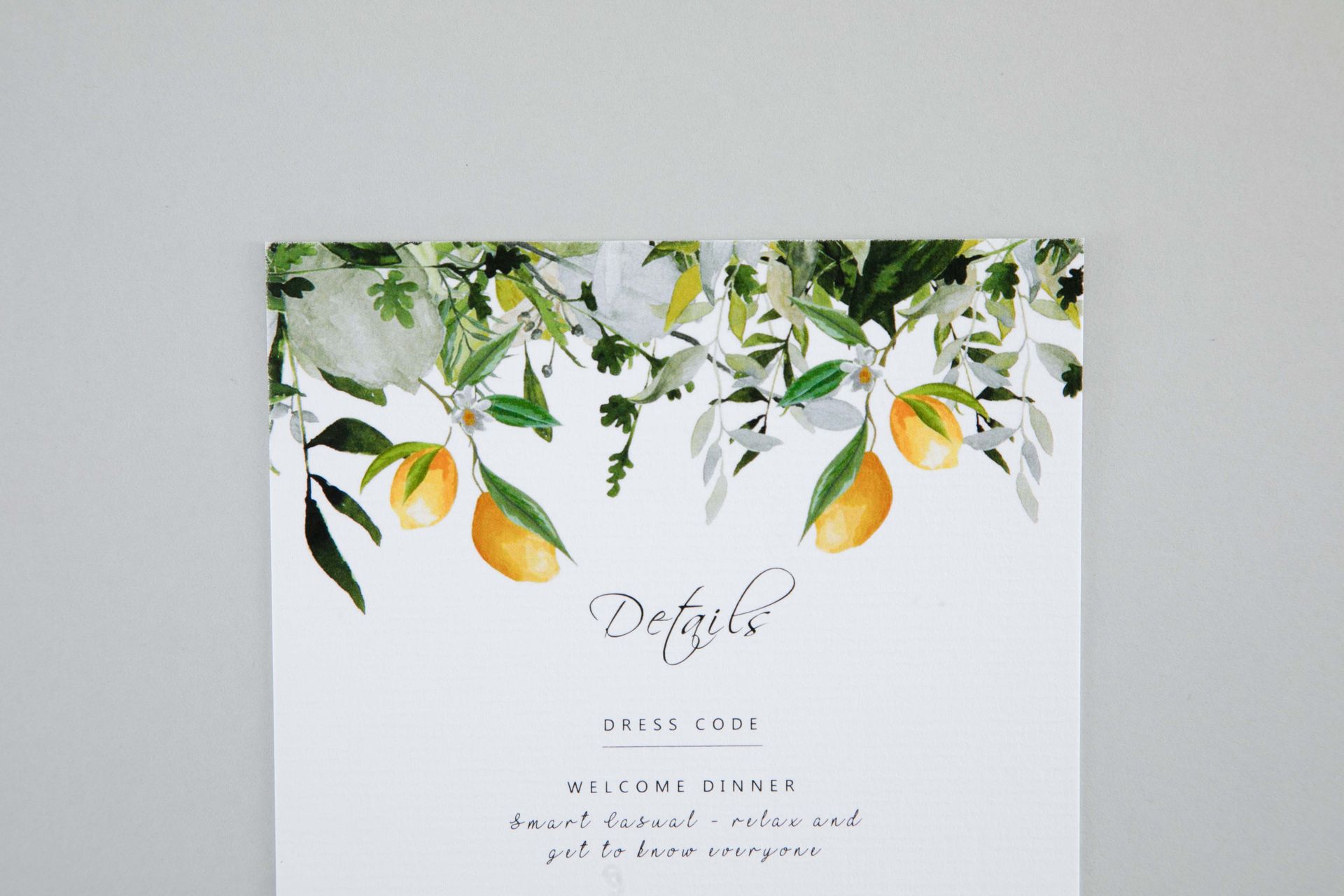
By Tahir Chowdry
•
February 6, 2026
Summer weddings come together in spring. Dates are set, venues are locked in, and stationery decisions move from inspiration folders to print‑ready files. The challenge is knowing what to print, when to order it, and how to keep everything on budget without compromising on feel. This guide lays out clear timelines, typical UK cost drivers, and practical design tips. It also covers eco and tactile stock ideas, how pre‑flight checks protect your artwork, and what to expect for standard and rush lead times. Use it as a checklist you can act on today. If you are still deciding where to print, our Fulham team supports walk‑ins and urgent requests with pre‑flight checks and first‑print quality control. Same‑day or next‑day is often possible when files are ready. What to print and when Think in three stages. Early announcements, formal invitations, and on‑the‑day pieces. Save‑the‑dates: Send 6 to 8 months before the wedding, earlier for destination plans. A6 or DL cards on 300 to 400gsm uncoated stock feel substantial and post well. Invitations and RSVPs: Mail 10 to 12 weeks out. Include main invite, RSVP, details card (travel, accommodation, dress code), and envelopes. Consider a QR code for online RSVPs to reduce admin. On‑the‑day stationery: Order of service booklets, menus, place cards, table numbers, welcome boards, seating plans, bar lists, and small directional signs. Finalise guest names 2 to 3 weeks before the day to allow print and any finishing. If you are running tight, batch in phases. Print the invitation suite first, then menus and signage once final counts are confirmed. Batching reduces waste and keeps costs predictable. Typical UK cost drivers and how to stay on budget Wedding print pricing varies by quantity, paper, format, and finishing. These are the drivers that move costs up or down. Paper weight and grade: Premium uncoated stocks in the 300 to 400gsm range give a luxury feel. Silk and satin‑coated stocks can be slightly more economical and print colour-rich artwork well. Finishes: Foiling, embossing, soft‑touch lamination, and metallic inks add impact but introduce extra steps and time. Use them selectively, for example, on the main invitation only, and keep the rest of the suite clean to balance spend. Sizes and formats: Standard formats such as A6 and A5 optimise sheet usage. Odd sizes can be beautiful, but may increase waste and cost unless planned carefully. Quantities: Per‑unit pricing improves as you increase volume, but ordering far beyond your list leads to waste. Print a 10 percent buffer rather than doubling up. Personalisation: Variable data for names and table numbers is efficient when set up correctly. Provide a clean spreadsheet to avoid amendments mid‑run. Batching: Group items that share the same stock and colour approach. Printing invitations, RSVPs, and details cards together can reduce set‑up time. A practical budget tip: elevate one hero piece, usually the main invitation, and keep support pieces minimalist. The overall suite still reads as premium. Artwork checklist and how pre‑flight protects you A pre‑flight is a technical check that ensures your files are ready for print. It prevents delays and reprints. Use this checklist before you send: Bleed and safe area: Add 3 mm bleed on all sides and keep type within a 3 to 5 mm safe margin. Colour: Set print files to CMYK. If you use spot colours or metallics, label them clearly and supply a reference. Resolution: 300 dpi for images at final size. Avoid upscaling small web images. Fonts: Outline type or embed fonts; include any licensed typefaces if we are assisting with final layout. Black text: Use 100 percent black for small text to avoid fuzzy edges. Overprint and transparency: Flatten transparencies where possible; avoid accidental overprint on light text. File types: PDF/X‑1a or PDF/X‑4 are preferred. If you are working from Canva or a similar tool, export as print‑ready PDF with bleed and crop marks. Our team runs a pre‑flight artwork check as standard, flags issues, and can polish files in person when deadlines are tight. If you want to understand this process or need rapid help, learn more about our digital printing in London approach, including pre‑flight and first‑print checks, on our print services page. Eco and tactile stock ideas, and matching sets Modern eco stocks offer beautiful textures and strong ink hold. Consider: Recycled uncoated papers in 300 to 350gsm for invitations and 115 to 150gsm for inner pages in booklets. Cotton or bamboo‑based stocks with a soft, toothy feel that suits minimalist designs and letterpress‑style layouts. Soft‑touch laminate on silk stocks for menus that need light spill‑protection and a velvety finish. To create a cohesive set, define three constants. Choose one core paper family, one typeface pairing, and a restrained colour palette. Carry these across invitations, order of service, menus, and place cards. You can introduce a single accent technique, such as gold foil on the title line of the invitation and a matching foil monogram on the menu header. If you would like to see and feel options before committing, we can produce samples for non‑urgent projects. For multi‑page pieces such as order of service booklets, see our booklet printing guidance for formats, page counts, and binding options. Lead times and rush options Standard lead times for flat cards are typically 2 to 4 working days from approved artwork. Complex finishes or foil can extend production to 5 to 7 working days. For order of service booklets, allow 3 to 5 working days for digital runs and longer if specialty finishing is required. Rush options are available. Same‑day or next‑day production is often achievable for invitations, menus, and small signage when files pass pre‑flight and stock is on hand. If you are facing a last‑minute gap, our urgent printing London service can advise on realistic timelines and alternatives that protect quality. Paper choices for invitations and order of service Invitations: 300 to 400gsm uncoated or lightly textured papers are a safe choice for a premium feel and crisp typography. Silk stocks support image‑heavy designs and deep colour. For a statement, combine a heavy cover with soft‑touch lamination or a foil accent. Order of service: A5 booklets read well with a 300gsm uncoated cover and 115 to 150gsm uncoated inner pages. Uncoated pages are comfortable to hold and reduce glare during the ceremony. Keep type sizes legible. Body copy at 9 to 10 pt on uncoated stock is comfortable; increase to 10 to 11 pt if your font has a tall x‑height or fine strokes. Pricing context for common quantities Exact pricing depends on materials and finishing. The notes below outline what drives the number rather than fixed figures. 150 invitations: Cost will vary with stock weight, single vs double‑sided print, and any foil or special finish. Standard digital print on a premium uncoated stock is typically more economical than specialty methods and enables faster turnaround. 500 invitations: Per‑unit pricing improves at this volume. Sheet‑efficient sizes and a shared stock across the suite will help. Speciality finishing on all items may stretch timelines and budget, so consider foiling the main invite only. Full suite vs piecemeal: Printing invitations, RSVPs, and details cards together can reduce set‑up costs. Add envelopes, menus, and place cards in a second batch once final numbers are confirmed. For an accurate quote, share your quantity, desired stock, finishing preferences, and deadline. Our team will outline options and a schedule that fits. Where to print wedding invitations in the UK For couples in London, Vizability Media Group offers walk‑in support, pre‑flight checks, samples for non‑urgent projects, and same‑day or next‑day options when needed. Explore our wedding stationery page to see how we handle invitations, booklets, menus, and signage as a coordinated set. If you need rapid help or first‑time guidance, our Fulham print shop is set up for in‑person advice and quick proofs. Quick FAQ Is it cheaper to print my own invitations? Home printing rarely saves money once you factor in premium card, ink, test prints, and time. Professional digital print delivers consistent colour, neat trimming, scored folds, and matching envelopes. If budget is tight, choose a beautiful uncoated stock and a clean design rather than attempting complex finishes at home. How much do 500 wedding invites cost? It varies with stock and finish. A standard digital print on quality uncoated or silk stock is the most cost‑effective. Adding foil, embossing, custom shapes, or duplexing will raise the price and may extend lead times. Ask for options at two or three specification levels to compare value. How much does it cost to print 150 invites? Similar drivers apply. At this run size, digital print is ideal and allows for quick turnarounds and small amends. Keep to standard sizes to optimise sheet usage. What type of paper do you print invites on? Popular choices are 300 to 400gsm uncoated for a tactile feel, or silk‑coated for vibrant images. Textured and cotton stocks add character. We can match envelopes to the chosen paper family. How long do order of services take to print? A typical A5 booklet in digital print takes 3 to 5 working days from approved artwork. Timelines can vary with page count, stock selection, and finishing. Rush options may be available for simple booklets. What is the best paper for order of service? A 300gsm uncoated cover with 115 to 150gsm uncoated inner pages balances readability, weight, and cost. If the service is outdoors or in low light, uncoated pages reduce glare. Where to print wedding invitations in the UK? Couples in London can visit Vizability Media Group in Fulham for in‑person support and rapid production. We offer local delivery and shop collection. Gentle next steps Set your print plan: invitations now, on‑the‑day items after RSVPs. Choose one core stock and a simple finish for a cohesive, budget‑friendly suite. Send print‑ready files early. If you are unsure, request a pre‑flight review and a sample. Ready to move from plan to print? Visit our page for wedding cards in London to see options for invitations, booklets, and on‑the‑day stationery, or drop in to our Fulham shop for guidance and timelines. If your deadline is close, our same day printing in London page explains how we handle urgent work and what we need from you to start within hours. Internal links included: Digital printing in London overview: https://www.vmgldn.com/print Booklet printing guidance: https://www.vmgldn.com/brochures-and-booklets Wedding stationery options: https://www.vmgldn.com/wedding-stationery Same day printing in London: https://www.vmgldn.com/same-day-urgent-print Contact: Vizability Media Group, 731 Fulham Rd, London SW6 5UL Phone: 020 7736 7910 Email: hello@vmgldn.com Your stationery is a reflection of your day. With clear files, the right paper, and a calm plan, print becomes one of the most satisfying boxes to tick. Let us know your needs, and we will get to work.